
Travel Inspiration
How to Plan a Multi-Destination Luxury Trip
Weaving several worlds into one journey, without the seams showing.
The best multi-destination luxury trip never feels like several holidays stitched together. It feels like one long, considered story, where each chapter earns its place and the joins between them simply disappear. Doing that well is less about cramming in more and more about choreography: the right pairings, the right order, and a pace that leaves you arriving rather than recovering.
We plan these journeys all year round, and the ones that linger in memory share a quiet discipline. They resist the temptation to see everything. They give each place enough time to become real. And they hand the logistics to someone else entirely, so the traveller is free simply to be present. What follows is how I think about a multi-destination luxury trip, from the first vague idea to the morning you fly home, with the honest trade-offs included rather than glossed over.
Start with the feeling, not the map
The instinct is to begin with a list of countries. I start somewhere softer: what do you want this trip to feel like? A honeymoon that opens with adrenaline and ends in stillness will be built differently from a multi-generational family journey, or a milestone birthday where everyone gathers in one villa before scattering to do their own thing. Once we understand the emotional shape of the trip, the destinations very nearly choose themselves.
This is also where realism helps. Two weeks is a generous canvas, but it is not infinite. I would rather give you two destinations done beautifully than four done in passing. If your heart is set on more, we will tell you honestly what that costs in time on the ground, and let you decide with eyes open. Browsing our full collection of destinations is a good way to feel out which worlds genuinely call to you before any routing is drawn.
The questions worth answering first
Before any map comes out, a handful of questions does most of the heavy lifting. How much do you actually want to move, as opposed to settle? Is this a trip about doing, about seeing, or about recovering from a hard year? Who is travelling, and do they all want the same thing, or will the group need room to split and regroup? And, quietly but importantly, what is your tolerance for early mornings and airports, because a multi-stop journey asks more of both than a single-base holiday ever will. The answers shape everything that follows, and they are far more useful than a wish list of place names.
The art of the pairing
A great multi-destination luxury trip lives or dies on its pairings. The classic, and still one of the finest, is safari followed by beach. There is a reason it endures: the contrast is total. You spend your first days in the bush, up before dawn, eyes wide on the plains, before melting into the warm, slow quiet of an island. The two halves flatter each other precisely because they are opposites.
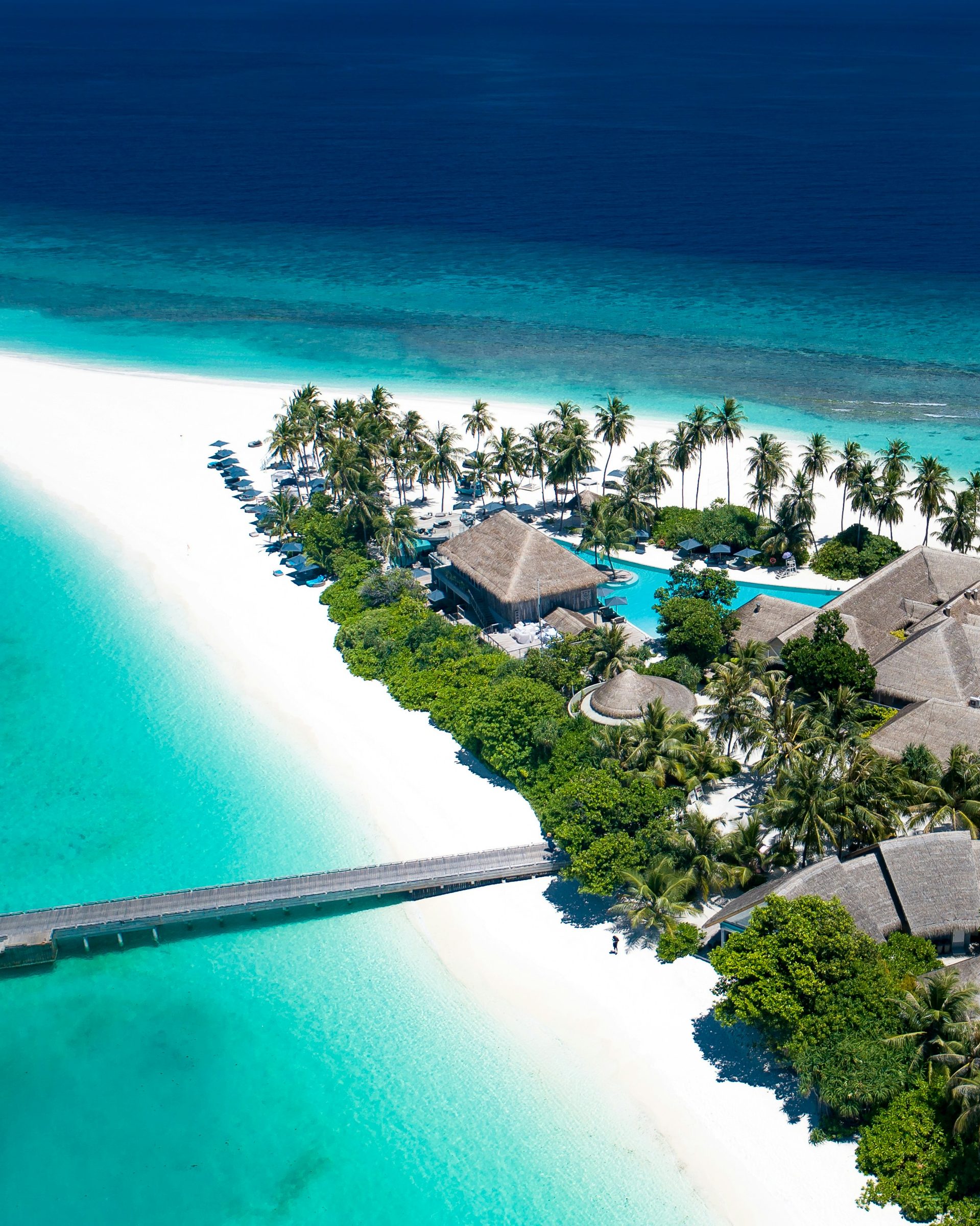
We arrange a great many of these. A week on safari in Tanzania, following the migration across the Serengeti, then a flight east to the Maldives for a week of barefoot recovery on the water. The bush teaches you to look; the ocean teaches you to let go. Other pairings carry their own logic: a culture-rich city before a coastline, mountains before a lake, a wine region before a quiet farmhouse. The skill lies in alternating texture, so no two chapters ask the same thing of you.

Why the safari and beach pairing endures
It is worth saying why this particular combination works so reliably, because the logic applies far beyond Africa and the Indian Ocean. Safari is an early-rising, adrenal, deeply present kind of travel: you are out before the light, scanning the grass, your senses turned all the way up. After five or six days of that, the body is gloriously, productively tired. A beach finish in the Seychelles or the Maldives gives that fatigue somewhere to go. You arrive on the water already emptied of work and noise, and the stillness does not feel like boredom, it feels like reward. Try the order the other way around and it rarely lands the same way: it is hard to wind up after you have wound down.
Beyond the classic: pairings worth knowing
The same principle, contrast then calm, opens up dozens of routes. A few we return to often: a great world city to start, full of museums and long dinners, before a quiet stretch of coast to digest it all. The high mountains followed by a lakeside or a vineyard, swapping altitude and effort for soft afternoons. A culturally dense country such as Japan, demanding and stimulating, paired with a tropical island where nothing is required of you. The texture matters more than the geography: the aim is always to alternate what the trip asks of you, so each place feels like a genuine change of key rather than a variation on the last.
Pace, and the case for fewer stops
If there is one mistake I gently steer travellers away from, it is moving too often. Every relocation, however smooth, costs a half-day: packing, transfers, check-in, finding your feet. Do it too many times and the trip becomes a blur of arrivals. As a working rule, I suggest a minimum of three nights in any single place, and four or five where there is real ground to cover or a long flight to recover from.
Sequencing matters just as much as duration. We tend to order a journey from the most active to the most restful, so the energy expended early is repaid by stillness at the end. You want to fly home rested, not in need of a second holiday. We also build around the practicalities of time zones and flight connections, so the days move in one direction rather than doubling back on themselves.
How many destinations is too many
The honest answer is that it depends on the shape of the trip, but the arithmetic is unforgiving. In a fortnight, two destinations feels luxurious, three feels full but rewarding, and four starts to feel like a relay. Each new stop does not just subtract its own travel day; it compounds the sense of never quite landing anywhere. The travellers who come home most glowing are almost always the ones who resisted adding the fourth place. There is a particular kind of confidence in choosing less, and it is nearly always repaid.
Making the joins invisible
This is the part most travellers never see, and the part that matters most. Between destinations sit the unglamorous realities: internal flights, private transfers, visa requirements, baggage that needs to clear customs, a driver who must be exactly where he says he will be. Handled badly, these are where luxury trips quietly fall apart. Handled well, they are invisible.
When we plan a multi-destination journey, every connection is arranged in advance and held under a single point of contact. You are met on arrival, walked through the parts that would otherwise mean queues, and moved between worlds without ever wondering what happens next. If a flight shifts, we shift around it before you have noticed. The luxury is not only the hotels; it is the absence of friction between them.
The connections that catch people out
A few logistical realities deserve naming, because they are where self-planned multi-stop trips most often come unstuck. Internal flights in remote regions run to their own timetables, and a missed light-aircraft transfer to a safari camp is not a thing you can simply rebook on the next service. Baggage allowances on small planes are far tighter than on the long-haul leg that brought you, which is why we plan the packing as carefully as the routing. Visas and entry rules can differ at each border and sometimes change with little notice. And a connection that looks comfortable on paper can be perilous in practice if it leaves no margin for a delayed bag or a slow queue at immigration. We build in that margin deliberately, so a single late arrival never topples the rest of the journey.
None of this should be your concern, and that is rather the point. The traveller's job on a well-planned trip is to look out of the window and enjoy the change of scene. Ours is to make certain the car is waiting, the room is ready, the flight is held and the paperwork is in order, so that the only thing crossing your mind between worlds is how good the next one is going to be.
A few honest pointers
- Build in one genuinely unstructured day per destination. The unplanned afternoons are often the ones people remember.
- Mind the climate seams. Pairing two destinations means checking two seasons, and the best window for one may be the worst for the other.
- Pack for the whole journey, not each leg. A safari wardrobe and a beach wardrobe in one case takes thought; we are happy to advise.
- Leave room at the end. A final night somewhere calm, near your departure airport, takes the panic out of the flight home.
- Carry a small overlap bag. One change of clothes and your essentials in cabin baggage means a delayed case at a stopover never derails the next leg.
- Decide early where you want connectivity and where you do not. A safari camp off the grid is a gift; a city stay usually wants you reachable. We plan around both.
These are small disciplines, but they are the difference between a journey that flows and one that lurches. Most of them come down to the same instinct that shapes the whole trip: leave a little air in the plan, resist the urge to fill every hour, and trust that the unstructured spaces are where the best of a trip tends to happen.
Budget, value and where the money really goes
It is fair to ask whether a multi-destination trip is simply more expensive, and the honest answer is that it usually carries some additional cost, mostly in the extra flights and transfers between stops. But thoughtful routing keeps that sensible, and the spend is rarely where people expect. The biggest savings come from sequencing flights well, so you are not crossing the same airspace twice, and from being matched to the right property in each place rather than the most famous one. A quietly brilliant lodge often delivers far more than a trophy address at twice the figure.
The real value, though, is not financial at all. It is in the experience of moving through several distinct worlds inside one journey, arranged so the seams never show. You are paying for the disappearance of friction as much as for the rooms: the car that is always there, the connection that is always held, the problem solved before it reaches you. That is difficult to price and impossible to assemble from a booking site, and it is precisely what makes the difference between a complicated holiday and a seamless one.
Travelling with family or a group
Multi-destination journeys can be wonderful for families and groups, but they reward a little extra design. Different generations want different things, and the secret is to build in elasticity: a base everyone returns to, with the freedom to branch off in between. On a recent trip a family opened together in a city, split for a few days, the grandparents to a spa, the parents and teenagers to something more active, and reconvened for an island finish. Everyone got the holiday they wanted, and they came back to the table each evening with stories to trade. Children, in particular, cope far better with one or two well-chosen moves than with a relentless schedule, so we tend to keep the stops fewer and the stays longer when the youngest travellers are involved.
How we put it together, step by step
For those who like to see the workings, here is roughly how a multi-destination journey takes shape in practice. We begin with that conversation about feeling and pace, then sketch a routing rather than an itinerary: the order of the worlds, the rough number of nights, the way the flights knit together. Only once the skeleton feels right do we choose the properties, matching each to the chapter it sits within. Then comes the invisible layer, the transfers, the internal flights, the visas, the meet-and-assist at every threshold, all held under a single point of contact. By the time you receive the finished plan, the hard decisions have already been made and quietly resolved.
Throughout, we are watching for the joins that tend to fail: a tight connection that leaves no room for a delayed bag, a time-zone shift that would land you somewhere exhausted, a season that suits one stop but not the next. Catching these in the planning is the entire job. The traveller should feel only the result, which is a fortnight that moves like a single, well-paced piece of music.
Done with care, a multi-destination luxury trip becomes more than the sum of its places. It becomes a single arc with movement and rest, intensity and ease, designed so that you simply travel and we carry the rest. When you are ready to shape yours, tell us how you like to travel and we will draw the routing around you.
Frequently asked questions
How many destinations should one trip include?
For most travellers, two or three destinations across two to three weeks strikes the right balance. Fewer stops mean deeper time in each place; more than three in a fortnight usually means living out of a suitcase rather than enjoying the journey.
How long should we stay in each place?
As a guide, allow at least three nights per destination, and four or five where there is real ground to cover. A safari deserves longer than a city, and an island finish wants enough time to actually slow down.
What is the best order to visit multiple destinations?
We usually sequence from the most active to the most restful, so a trip might open with a city or a safari and close on a beach. We also build the routing around flight connections and time zones so the days flow rather than zig-zag.
Is a multi-destination trip more expensive?
It can be, mostly through additional flights and transfers, but thoughtful routing keeps costs sensible. The real value is in the experience: several distinct worlds within one journey, arranged so the joins are invisible.
How do you handle the logistics between destinations?
We arrange every connection, transfer, internal flight and visa requirement, with a single point of contact throughout. You move from one place to the next without queues, guesswork or gaps.
one journey, many worlds
Let us weave your multi-destination journey, seam by seam.
Tell us the places on your mind and how long you have, and we will shape a single, seamless route around you.
Plan My Multi-Stop Trip