
Family Luxury
Ikos vs Boutique Hotels: Which Luxury Stay Is Right for You?
All-in ease or characterful and small. We compare the two honestly.
It is one of the most common questions families ask us, and the honest answer in the Ikos vs boutique hotels debate is that there is no single winner. There are two very different definitions of a good holiday, and the right one depends entirely on the family, the children's ages and what you most want to come home having felt. Here is how we help travellers decide, without the marketing gloss.
On one side sits the polished, generous all-inclusive resort, of which Ikos has become the benchmark across Greece, Spain and now further afield. On the other, the small, characterful boutique hotel, chosen for soul rather than scale. Both can be genuinely luxurious, and we send families happily to each every season. They simply ask different things of you, and give different things back. Below we set out what each really delivers, where each falls short, and the honest questions to ask yourself before deciding.
What we mean by each
It is worth defining terms, because both have shed their old reputations. When we say an Ikos-style resort, we mean the new generation of premium all-inclusive: a large property, often several hundred rooms, where one price folds in multiple restaurants, a serious kids' club, sports, a spa, evening entertainment and, in the case of Ikos itself, touches such as à la carte dining from named chefs, a curated wine cellar and a small fleet of cars you can borrow to explore. This is a very long way from the cheap-and-cheerful all-inclusive of the nineties, and conflating the two does it a disservice.
By a boutique hotel we mean something deliberately small, frequently under forty rooms and often owner-run, where the appeal is individuality: a converted Venetian townhouse in the old quarter, a cluster of stone suites on a hillside, a design-led retreat that could not exist anywhere but where it stands. The luxury is in the particularity, not the breadth of facilities. Hold both definitions in mind, because the comparison only makes sense once you stop picturing a budget package on one side and a boutique on the other.
The case for the all-inclusive resort
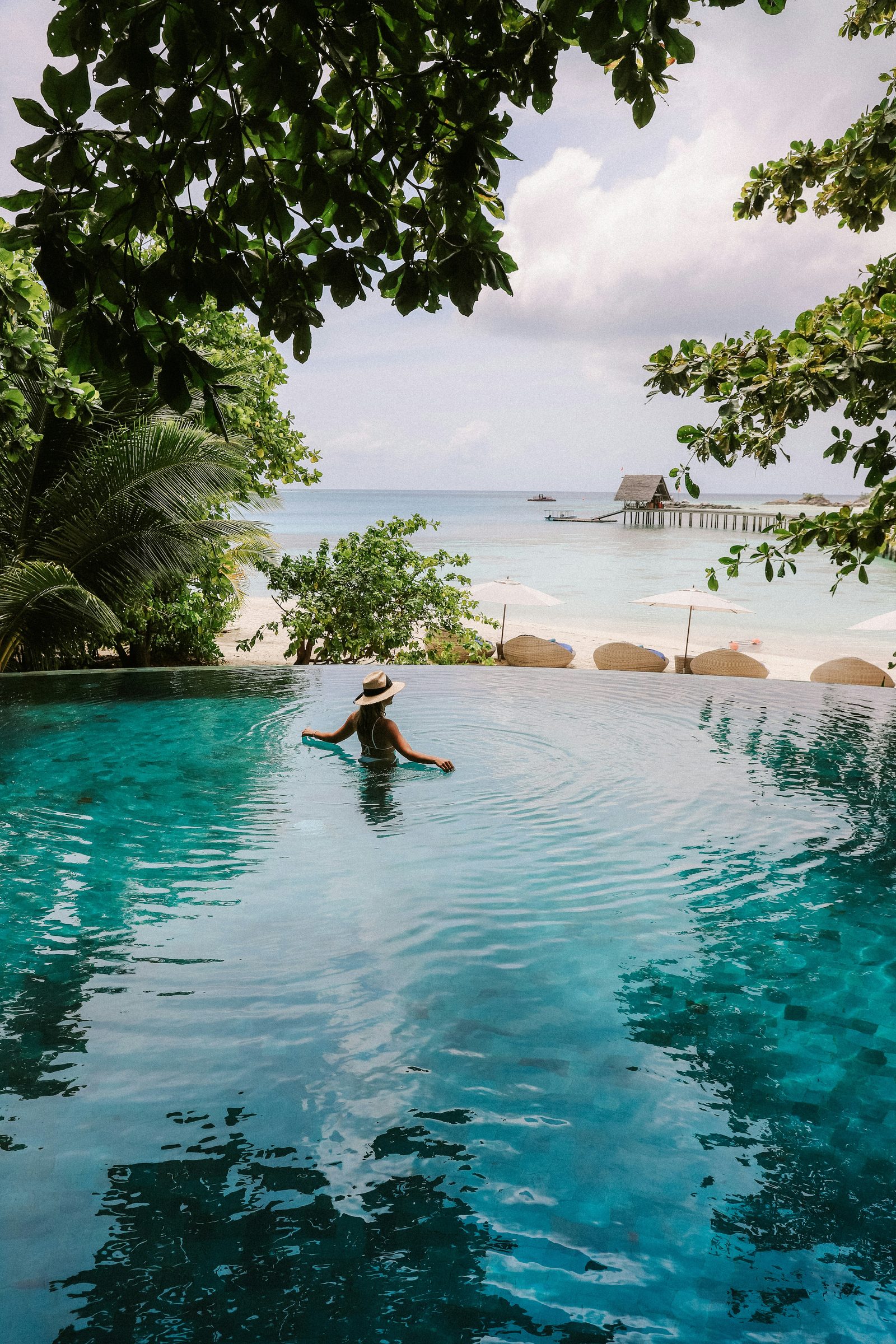
The great gift of an Ikos-style resort is freedom from logistics. Several restaurants, a serious kids' club, sports, spa and pools are all folded into one price, which means no decisions to negotiate at every meal and no wallet ever reached for. For families with younger children, this is not a small thing. It is the difference between a holiday that recharges parents and one that quietly exhausts them. There is a particular relief in the moment a seven-year-old asks for a third ice cream and the only correct answer is yes.
The practical advantages compound. A good kids' club, properly staffed and genuinely fun, buys parents the rarest holiday commodity of all: a few uninterrupted hours by the pool with a book. Mixed-age groups are catered for at once, so teenagers, toddlers and grandparents can each have the day they want and reconvene for dinner without anyone having compromised. And the predictability is a feature, not a flaw: you know broadly what every day holds, which is exactly what frazzled parents need when the school term has run them ragged.
The best of these resorts have moved a long way from the all-inclusive of old. The food is good, the wine list real, the design considered, and the children are looked after with genuine warmth. The luxury here is in the ease: everyone, of every age, can do exactly as they please, all day, with no friction. For many families that is the truest form of rest, and we say so plainly when it is the right fit. You can read more about how we approach this in our guide to family luxury travel.
Where the all-inclusive falls short
Honesty cuts both ways, so here is the other side. A large resort, however well run, is a degree removed from the place it sits in. You can spend a week on a beautiful Greek coast and barely meet a Greek who is not in uniform, eat little that is genuinely local, and leave with a tan but not much sense of where you have been. The scale that makes a resort so easy also makes it slightly generic: the buffet at breakfast, the loungers reserved by towel at dawn, the entertainment programme that can feel a touch corporate. For travellers who measure a holiday by what they discovered, this can quietly disappoint.
The case for the boutique hotel
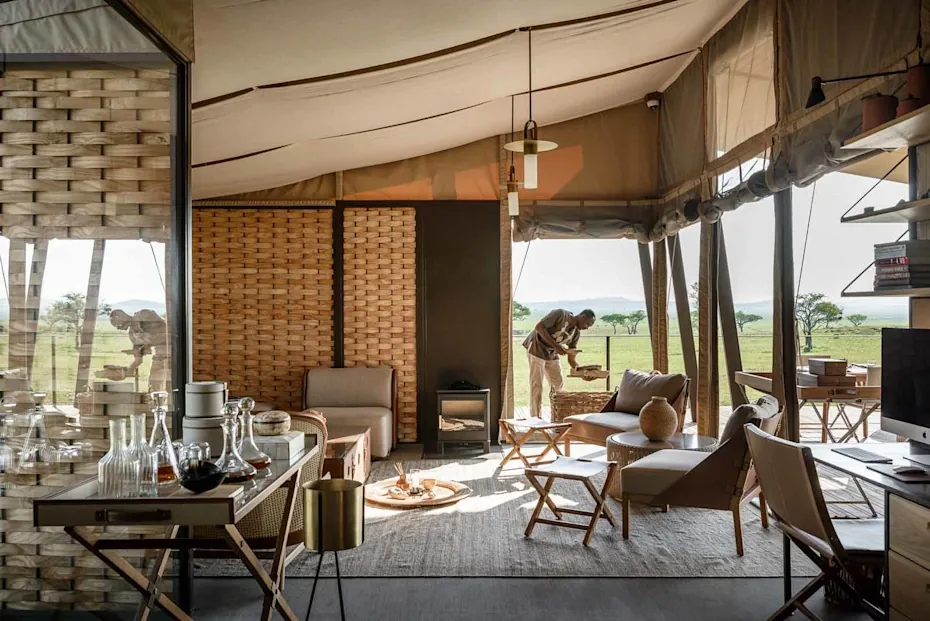
A boutique hotel offers something a large resort, by its nature, cannot: individuality and a sense of place. These are small properties, often family-run, where the design tells a story, the staff know your name by the second morning, and the setting feels woven into the destination rather than walled off from it. You step out of the front door and you are genuinely somewhere: a fishing village, an old town, a vineyard, a stretch of coast that has not been smoothed flat for mass appeal.
The rewards are real and they are lasting. The food tends to be better and more rooted, because a small kitchen cooks what the market and the season give it. Service is personal rather than processed, the kind where the manager remembers your daughter is afraid of the resident dog and quietly keeps them apart. And the memories are sharper: it is the tiny hotel with six rooms and the host who walked you to his cousin's taverna that people describe years later, far more often than the resort with the eleven restaurants. That same instinct for individuality is what guides the broader collection of small hotels and lodges we trust, gathered in The Atlas Edit.
Dining: the clearest dividing line
If you want to understand the two styles quickly, look at how they handle dinner. At an Ikos-style resort, dining is abundance made effortless: several restaurants under one roof, Greek, Italian, Asian, a grill, so a family of fussy and adventurous eaters can each be satisfied without negotiation, and without a bill at the end. The standard at the better resorts is genuinely high now, with à la carte menus rather than endless buffets and wine that you would happily order at home. The appeal is breadth and the absence of friction; the limitation is that it is, ultimately, hotel food, cooked at scale for a broad audience.
At a boutique hotel, dinner is an event you participate in. The kitchen is small, the menu short and tied to the morning's market, and some nights you will choose to walk into the village and eat where the owner sends you. This is more rewarding and more rooted, and it is also more work: you plan, you book, you occasionally get it wrong, and a tired child at nine o'clock in a grown-up taverna is its own small ordeal. Which of those pictures makes you relax and which makes you tense is, quite reliably, the answer to the whole question.
Cost and the honest maths
Families often assume the all-inclusive is the cheaper option and the boutique the indulgence, and that is not always true. A premium all-inclusive carries a substantial headline price, but it is genuinely all-in: meals, drinks, the kids' club, most activities, all settled before you arrive, with no daily reckoning and no anxiety about a teenager's smoothie habit. A boutique hotel may show a lower nightly rate and then accumulate, restaurant by restaurant, excursion by excursion, until the totals are closer than expected. We never talk in prices here, but we do talk honestly about value, and value is about matching the structure to your temperament: some families relax most when everything is paid for, others resent paying for a kids' club they will not use. Knowing which you are is worth more than any rate comparison.
What a boutique stay asks of you
The trade-off is that you do more of the choosing. Meals are an occasion to plan, days out want a little arranging, and the breadth of on-site facilities is narrower: there may be one pool rather than five, no kids' club, no late-night entertainment to absorb a restless ten-year-old. Costs are also à la carte, which some families find adds up in a way the single all-inclusive price does not. None of this is a drawback for the right traveller; for families with slightly older children, or for those who actively want to explore and eat their way through a place, it is precisely the appeal. But it is worth going in clear-eyed, because a boutique hotel rewards the engaged and can frustrate those who simply wanted to switch off entirely.
So which should you choose?
As a rough guide: if your children are young, if the point of the trip is to switch off completely, or if a mixed-age group needs everyone catered for at once, an all-inclusive resort usually wins. If your children are older, if you travel to discover as much as to relax, or if character matters more than facilities, a boutique hotel will reward you. Be honest, too, about your own holiday temperament, not the one you aspire to: there is no virtue in a characterful hilltop hotel if what you actually crave is a fortnight of doing nothing within reach of a swim-up bar.
It can help to picture the worst version of each. The bad day at an all-inclusive is a slightly soulless one, pleasant but interchangeable, that could have happened anywhere. The bad day at a boutique hotel is a logistical one: a long drive to a closed restaurant, a child bored by the lack of a pool full of other children. Whichever of those you would forgive more easily tells you a great deal about which style is truly yours.
How the destination changes the answer
The right choice is not fixed; it shifts with where you are going. In Greece, the question is wonderfully open, because the country does both superbly: the premium all-inclusives cluster on the mainland coasts of Halkidiki and the Peloponnese and on islands such as Corfu and Kos, while the boutique tradition runs deep through Crete, the Cyclades and the small design hotels of the lesser-known islands. That richness on both sides is exactly why we so often build a Greek trip from one of each.
Elsewhere the balance tips. In a destination built around a single, spectacular natural draw, where the point of the trip is the place itself, a characterful small property almost always serves better, because you did not travel that far to stay inside a compound. By contrast, on a pure beach holiday with young children and no appetite for logistics, the all-inclusive earns its keep wherever it is. The lesson is simply that the stay and the destination are one decision, not two, and they should be made together rather than in sequence.
This is also where a second opinion pays off. Brochures and review sites flatten everything into stars and superlatives; they cannot tell you that a particular resort's kids' club is exceptional but its beach is a long walk, or that a feted boutique hotel is glorious for a couple and quietly miserable with a five-year-old. That texture, drawn from having stayed in the rooms and eaten in the restaurants, is what turns a good holiday into the right one.
Why not both
And it need not be either/or. Greece is a perfect example: you might pair a relaxed week at a generous beachfront resort with a few nights afterwards in a small, design-led hotel on a quieter island, giving the family both the ease and the discovery within a single trip. The all-inclusive stretch lets everyone decompress and the children burn off their energy; the boutique coda delivers the place, the food and the sense of having travelled. We arrange this kind of pairing often, both within Greece and across our wider list of destinations, and it tends to be the holiday people talk about for years.
A note on travelling as the children grow
One last thought, because it is the one families most often overlook: the right answer changes as your children do, and the holiday that was perfect three summers ago can quietly stop fitting. The all-inclusive that was a lifeline with a toddler and a baby, all kids' club and shallow pool, can feel confining to a fourteen-year-old who would rather be exploring a town than circling a buffet. Equally, the characterful little hotel that suits two teenagers and a couple of curious parents would have been a strain when there was a pushchair and a nap schedule to honour.
We try to plan with that arc in mind rather than treating each year in isolation. For a young family we will often lean towards the ease of a resort while gently introducing a night or two of somewhere with more character, so the appetite for discovery grows alongside the children. As they get older, the balance tips the other way, until one summer the family that once needed every facility on site is happiest in six rooms above a harbour, eating where the owner tells them to. There is no single correct stay, only the correct stay for this family, this year, and that is precisely the judgement we are here to make with you.
The real luxury, in the end, is choosing the right stay for who you actually are, rather than the one a brochure says you should want. If you would like an honest, unbiased view on which suits your family, tell us a little about how you travel and we will guide you.
Frequently asked questions
What is the main difference between Ikos and a boutique hotel?
Ikos resorts are large, polished all-inclusive properties built around effortless family ease, with multiple restaurants and full kids' programmes. Boutique hotels are small and characterful, prized for individuality, design and a sense of place rather than scale of facilities.
Which is better for families with young children?
For families with younger children, an Ikos-style all-inclusive often wins on practicality: kids' clubs, varied dining and the freedom of not reaching for a wallet. Boutique hotels can suit families beautifully too, but tend to favour slightly older children or those happy with a slower rhythm.
Are boutique hotels worth the extra effort?
If you value individuality, design and a genuine sense of place over breadth of facilities, then yes. A well-chosen boutique hotel offers an experience a larger resort simply cannot replicate, though it asks a little more planning around meals and days out.
Can you combine both on one trip?
Often, and we recommend it. A relaxed all-inclusive stretch followed by a few nights in a characterful small hotel can give a family both the ease and the discovery they are after.
Is all-inclusive ever the more luxurious choice?
Yes. The best all-inclusive resorts deliver a refined, generous experience where the luxury is in the freedom, never thinking about cost during the stay, which for many families is the truest form of relaxation.
the right kind of rest
Not sure which stay suits your family?
Tell us your children's ages and how you like to holiday, and we will recommend the resort or hotel that genuinely fits.
Find Our Right Stay