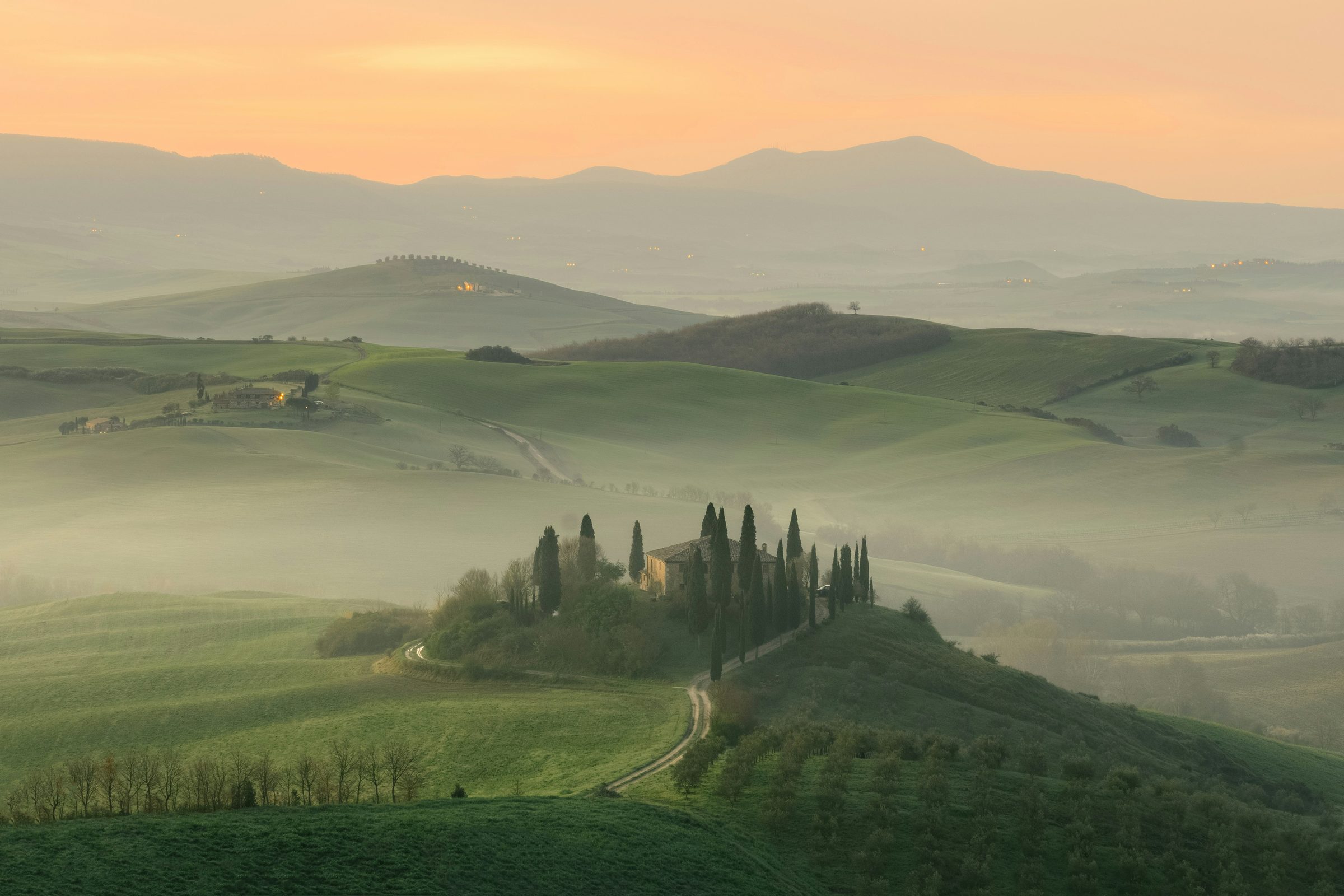
Hotel Edits
The Best Boutique Hotels in the Mediterranean
Small addresses with big character.
The best boutique hotels in the Mediterranean are not the ones with the most rooms or the loudest pool, but the ones that feel like staying with a friend who happens to have impeccable taste and a cook in the kitchen. They are small, considered and personal, and after years of staying in them ourselves, these are the ones we keep returning to and the way we decide between them.
What we actually mean by a boutique hotel
The word has been stretched until it covers almost anything, so it helps to be precise. To us, a boutique hotel is small, rarely more than forty or fifty rooms, with a single clear point of view running through the design, the food and the welcome. It is independent or owner-led rather than part of a large group, which is why the staff remember your name by the second morning and the breakfast feels cooked rather than assembled. The difference is felt in the details: the books left on the shelf, the wine the owner happens to love, the way the lighting has been thought about, the fact that nothing is quite standardised and nothing feels designed by committee.
That intimacy is the whole appeal, and it is also why we are careful. A small hotel with the wrong atmosphere is harder to escape than a large one, where you can at least lose yourself in the crowd. In a twenty-room house, the mood at breakfast is the mood of your holiday. Getting that match right, between the traveller and the temperament of the place, is the entire job, and it is why a list of boutique hotels in the Mediterranean is only ever a starting point rather than an answer.
The Greek islands: design-led and unhurried
If you want the purest expression of the form, start in the Cyclades. The best Greek island hotels have turned restraint into an art: lime-washed walls, raw linen, a single stem of bougainvillea against white, and a pool that catches the last of the light before dinner. They tend to be intimate, often family-run across two or three generations, and the food leans honestly on what the island grows and the boats bring in that morning. There is rarely a buffet in sight; instead there is a handwritten menu and a grandmother somewhere in the kitchen.
We send couples to the quieter Cyclades, Paros, Antiparos, Milos and Folegandros, for hotels that feel barefoot and unhurried, and reserve Santorini for those who want the famous caldera drama in a small cliffside house rather than the crush. We write more about choosing between the islands themselves in our guide to planning a summer in Greece, which pairs naturally with this edit and goes island by island.
Italy: romance, food and a sense of place
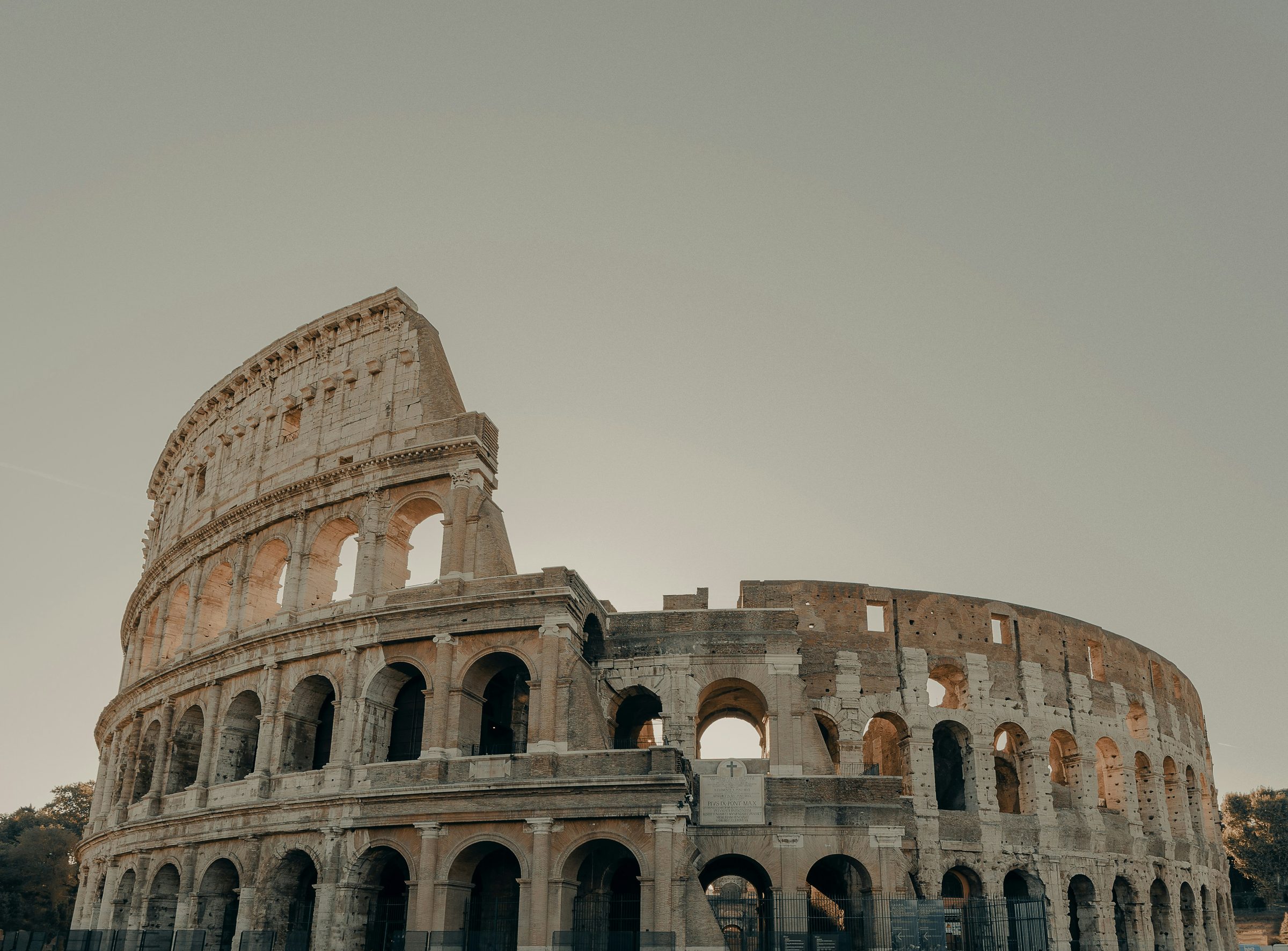
Italy does boutique differently. Here the small hotel is often a converted masseria among the olive groves of Puglia, a cliffside palazzo clinging to the Amalfi Coast, or a honey-coloured stone farmhouse in the Tuscan hills, and the pleasure is as much in the food and the setting as in the rooms. These are places to settle for several nights, eat extremely well, learn the names of the staff and let the days soften into one another. A morning swim, a long lunch under a pergola, a siesta, an aperitivo as the light turns gold: the Italian boutique hotel understands that doing very little, beautifully, is the height of luxury.
The trade-off is that the very best are tiny and book out a year ahead, particularly the masserie of the Valle d'Itria and the handful of genuinely lovely addresses on the Amalfi cliffs. For where to base yourself and how to thread it into a wider trip, our Italy travel guide goes region by region, and for couples it pairs well with our wider thinking on where to stay in Portugal when an Atlantic leg appeals.
Puglia, the Amalfi Coast and the islands
Within Italy the choice is really a choice of mood. Puglia, down in the heel, is the place for rustic grandeur: thick-walled masserie among the olive trees, sea that turns from jade to ink, and a table that never stops bringing burrata, orecchiette and bottles of primitivo. The Amalfi Coast is the opposite, all vertical drama and lemon groves clinging to cliffs, glamorous and a little theatrical, best enjoyed from a small hotel above the crowds with a boat to take you out to the quieter water. The Aeolian islands off Sicily, Salina and Panarea in particular, offer a third Italy: volcanic, low-key and gloriously undiscovered by comparison. We help travellers weigh these against one another rather than try to do all three in a single week, which never works.
What a considered interior actually feels like
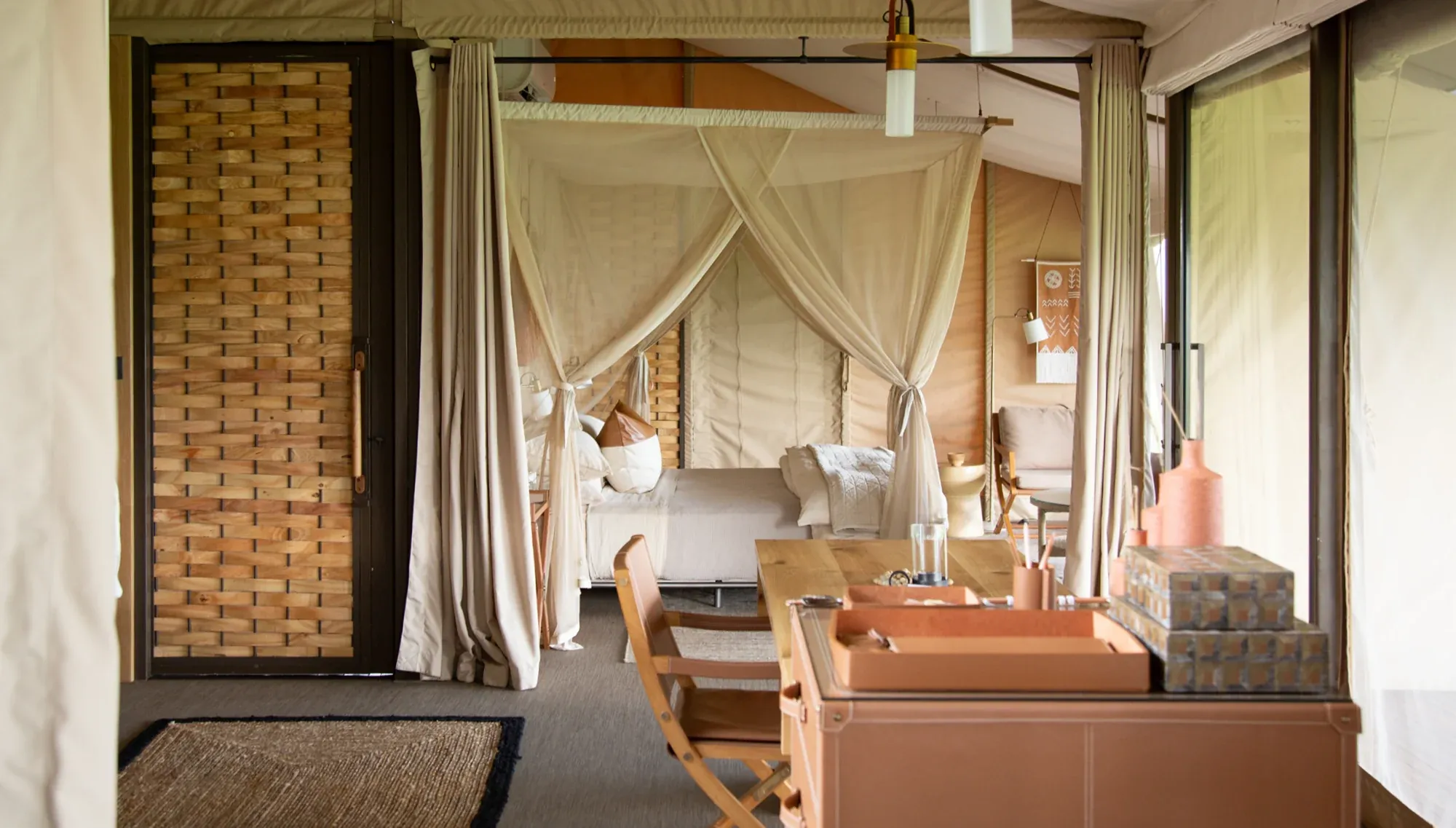
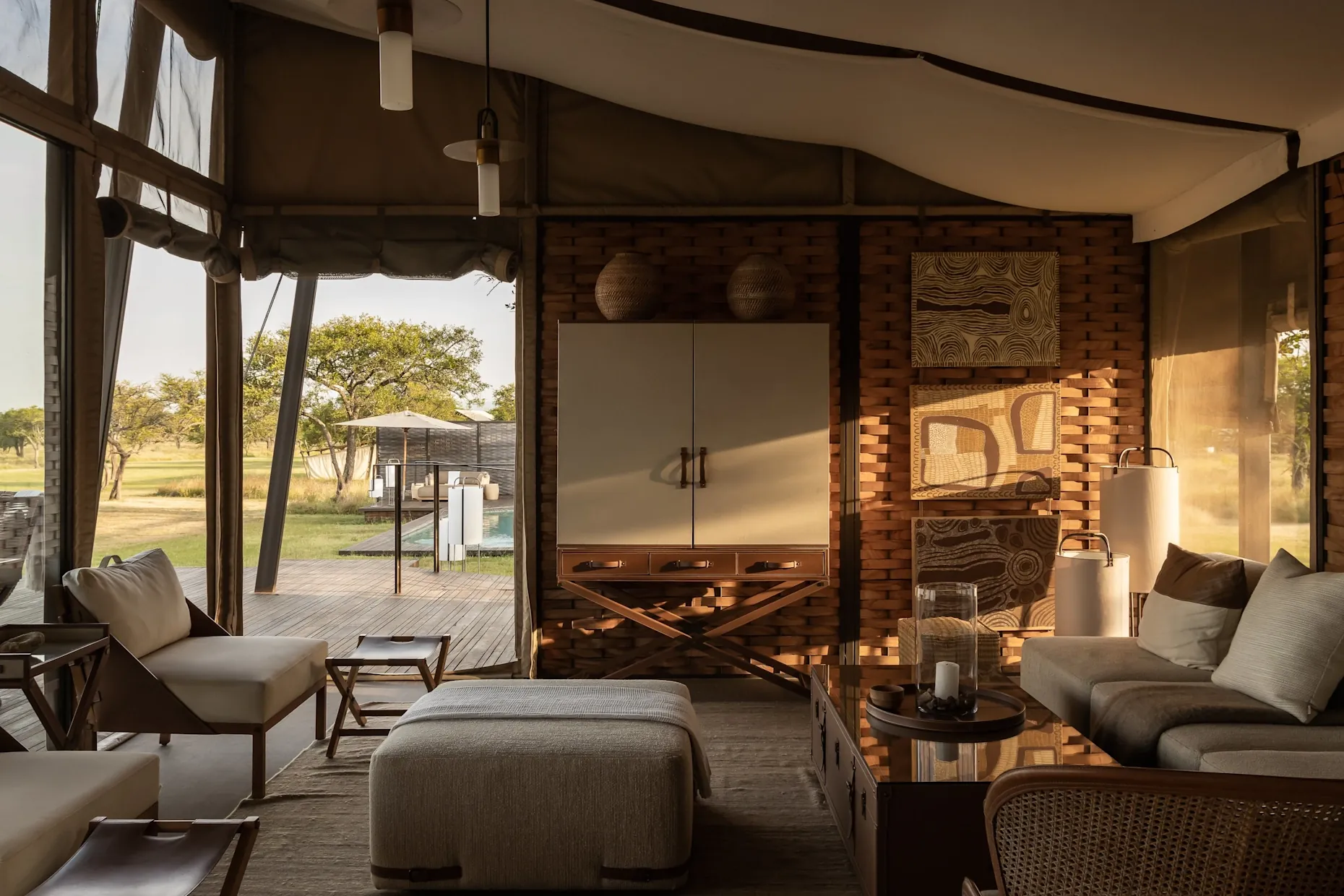
It is worth pausing on what design-led really means, because the phrase is overused. The hotels we love are not the ones with the most expensive furniture, but the ones where the rooms feel composed: natural materials, a restrained palette, good light morning and evening, and a lounge you actually want to sit in rather than walk through. The image below is from a lodge we admire far beyond the Mediterranean, but it captures the principle exactly, the warmth, the texture, the sense that someone with a real eye has considered every surface.
Spain and the western Mediterranean: quiet glamour
The Spanish coast, Mallorca and the Costa Brava offer a more low-key glamour: finca-style hotels among olive and almond trees, a relaxed approach to dressing for dinner, and a coastline that still hides genuinely undiscovered coves if you know where to look. The Tramuntana mountains of north-west Mallorca, with their terraced villages and stone hotels above the sea, are some of our favourite addresses anywhere in the region. The best places here feel effortless rather than showy, which is exactly the point, and they suit travellers who want beauty without performance.
Our guide to luxury travel in Spain covers the regions we love most and the small hotels within them, while the Dalmatian coast offers a quieter alternative again; our notes on travelling in Croatia cover the islands and stone towns worth the journey for those who want the Adriatic rather than the more familiar western Mediterranean.
Mallorca, the Costa Brava and the Spanish islands
Within the western Mediterranean, Mallorca is our first love, and specifically the north-west: the Serra de Tramuntana, where stone villages like Deia and Soller sit among terraced olive groves above a startling blue sea, and where a handful of small hotels have been carved out of old fincas and manor houses with real restraint. The Costa Brava, north of Barcelona, is rockier and more Catalan, with hidden calas reached on foot and a food culture that runs from village taverna to some of the most serious kitchens in Europe. Ibiza, away from its reputation, hides agroturismo hotels in the quiet north that are as calm as anywhere in the region. Each rewards a different temperament, and we are happy to talk a traveller out of the obvious choice when the quieter one suits them better.
How a small hotel handles dining
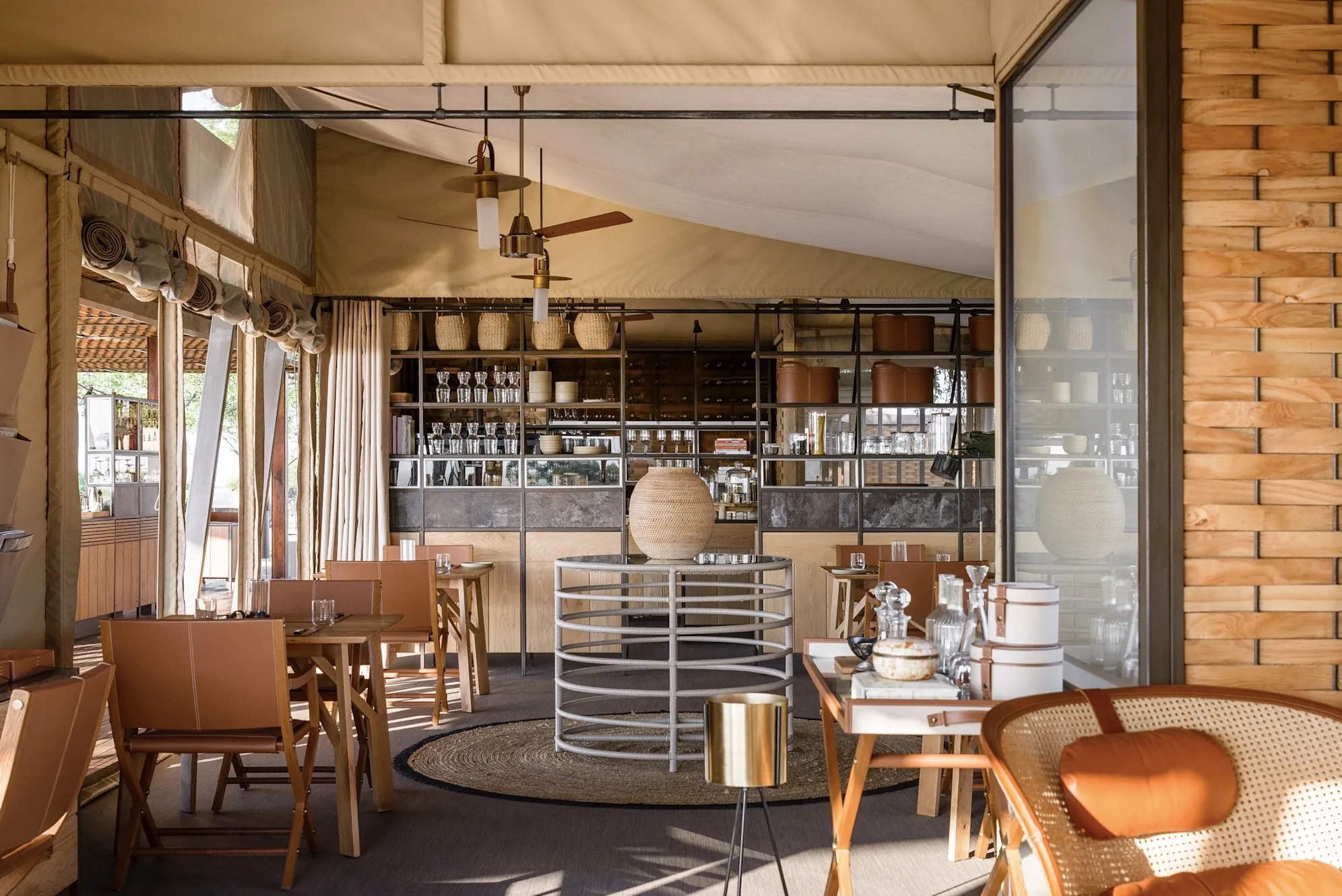
Food is where a boutique hotel either earns its place or quietly lets you down. On a small island or in a hill town, where dinner elsewhere can mean a long drive in the dark, a hotel restaurant you genuinely want to return to changes the entire shape of the holiday. The finest small hotels treat their kitchen as the heart of the house: a short menu that changes with what is good that day, a sommelier who actually talks to you, tables spaced for conversation rather than turnover. When the dining is right, you stop wanting to leave, which is the highest compliment a small hotel can earn.
How to choose between them
When clients ask us to choose, we come back to a few honest tests, and they are the same wherever you are in the region.
Size, food, location, atmosphere
Size first: under fifty rooms keeps the service personal and the pool calm at midday. Food second, for the reasons above. Then location, which is where we are most candid, since a cliff-top room with a breathtaking view often means a walk, a staircase or a boat to reach the water, while a room at sea level may trade the panorama for the sound of waves at your door. Finally atmosphere, the hardest thing to read from a website and the easiest to get wrong: whether a place is hushed or sociable, grown-up or family-friendly, barefoot or just slightly formal. That last quality is precisely why we only recommend places we know first-hand, and those tried-and-trusted addresses live in the Atlas Edit of hotels we love.
The wider Mediterranean: beyond the obvious three
Greece, Italy and Spain are where most travellers begin, but the region is larger and quieter than that, and some of the most rewarding small hotels sit just off the well-worn map. The Dalmatian coast of Croatia, with its walled stone towns and the islands of Hvar, Vis and Korcula, has a clutch of beautifully restored townhouse hotels and a sailing culture that suits a barefoot, boat-based holiday. The south of France keeps its own register of discreet, expensive simplicity in the hills behind the coast and on the gentler stretches of the Riviera. And the Atlantic edge, just beyond the Mediterranean proper, has a character all its own, which is why travellers drawn to small, characterful hotels often end up combining the two; our notes on where to stay in Portugal cover the Comporta dunes and the Douro for exactly this kind of pairing. The point of looking wider is not novelty for its own sake, but finding the place whose temperament matches yours, even if it is somewhere you had not thought to consider.
Who a boutique hotel really suits
For all their charm, small hotels are not the right answer for everyone or every trip, and part of being useful is saying so.
Couples and honeymooners
This is the natural home of the boutique hotel. A twenty-room house with a quiet pool, a romantic dining room and staff who anticipate rather than intrude is exactly what most couples picture, and it is where we spend much of our time. The smallest, most design-led addresses, often adults-only by temperament if not by rule, are perfect for honeymoons and milestone trips where privacy matters more than facilities.
Families and groups
Families do well in boutique hotels with the right disposition, particularly the Italian masserie and Spanish fincas with space to roam, a pool the children can live in and a kitchen relaxed about early suppers. We are candid, though, about the hushed, grown-up addresses that quietly prefer not to have toddlers at breakfast. For larger groups and multi-generational trips, a staffed villa often beats any hotel, giving everyone their own rhythm with a cook and a housekeeper to take the strain, and we plan a great many of these alongside the hotel stays.
How we add value beyond the room
Anyone can find a beautiful hotel online now. The work that matters is everything around it. We hold relationships with many of the owners and managers directly, which is how a room becomes the better room, how an anniversary is quietly marked, how a fully booked table appears and how a late checkout materialises on a long travel day. We sequence the stays so the trip builds rather than repeats: a livelier base followed by somewhere to decompress, the moving days timed and transferred so they feel like part of the holiday. And because we have stayed in these places ourselves, we can tell you the things that matter, which side of the hotel to ask for, when the pool falls into shade, whether the famous view is worth the climb. That first-hand judgement is the whole reason to plan this way, and it is the spirit behind every entry in our edit of hotels we love.
When to go, and how far ahead to plan
Book early for July and August, when the finest small hotels sell out months ahead and the best suites go first of all. We generally steer travellers towards the shoulder months of May, June and September instead, when the same rooms are calmer, the light is kinder, the sea is still warm and the towns belong a little more to the people who live in them. The whole region is lovelier when it is not at full volume, and the small hotels we love are at their best when they are not full to the doors. When you know roughly where you are drawn and how you like to travel, tell us the feeling you are after and we will shortlist the addresses worth your time.
Frequently asked questions
What makes a hotel a boutique hotel?
A boutique hotel is small, usually under fifty rooms, with a clear point of view in its design and service. It is owner-led or independently run rather than part of a large chain, and the experience feels personal rather than processed.
Which Mediterranean region has the best boutique hotels?
It depends on the holiday you want. The Greek Cyclades lead for design-led simplicity, Puglia and the Amalfi Coast for romance and food, and the Spanish coast and Mallorca for understated, low-key glamour. We match the region to the summer you are picturing.
Are boutique hotels good for families?
Many are, but not all. Smaller hotels can be wonderfully relaxed for families with older children, while some are quiet adult retreats. We are honest about which addresses genuinely welcome children and which are better kept for couples.
How far in advance should you book Mediterranean boutique hotels?
For the best rooms in July and August, six to nine months ahead is sensible, as the finest small hotels sell out early. For shoulder-season travel there is more flexibility, though the loveliest suites still go first.
Can Atlas&Co. book these hotels for me?
Yes. We arrange the rooms, the timing and the routing, often with added touches through our relationships with the owners, and weave the stays into a complete itinerary. Tell us your dates and the feeling you are after, and we will shortlist the addresses that fit.
small places, beautifully chosen
Let us find the boutique hotel that suits you exactly.
Tell us where you are drawn and how you like to travel, and we will shortlist the small addresses worth your time.
Begin Your Hotel Edit